The human brain is truly amazing. It can do things that still surprise scientists. From its detailed structure to its complex tasks, the brain is a natural wonder. Let’s look at 10 interesting facts about the brain’s amazing inner workings.
Get ready to be amazed by the brain’s complexity and abilities. It’s the control center of our bodies and the home of our consciousness. Whether you love neuroscience or just want to know more about the mind, these facts will amaze and teach you.
The Brain’s Incredible Complexity
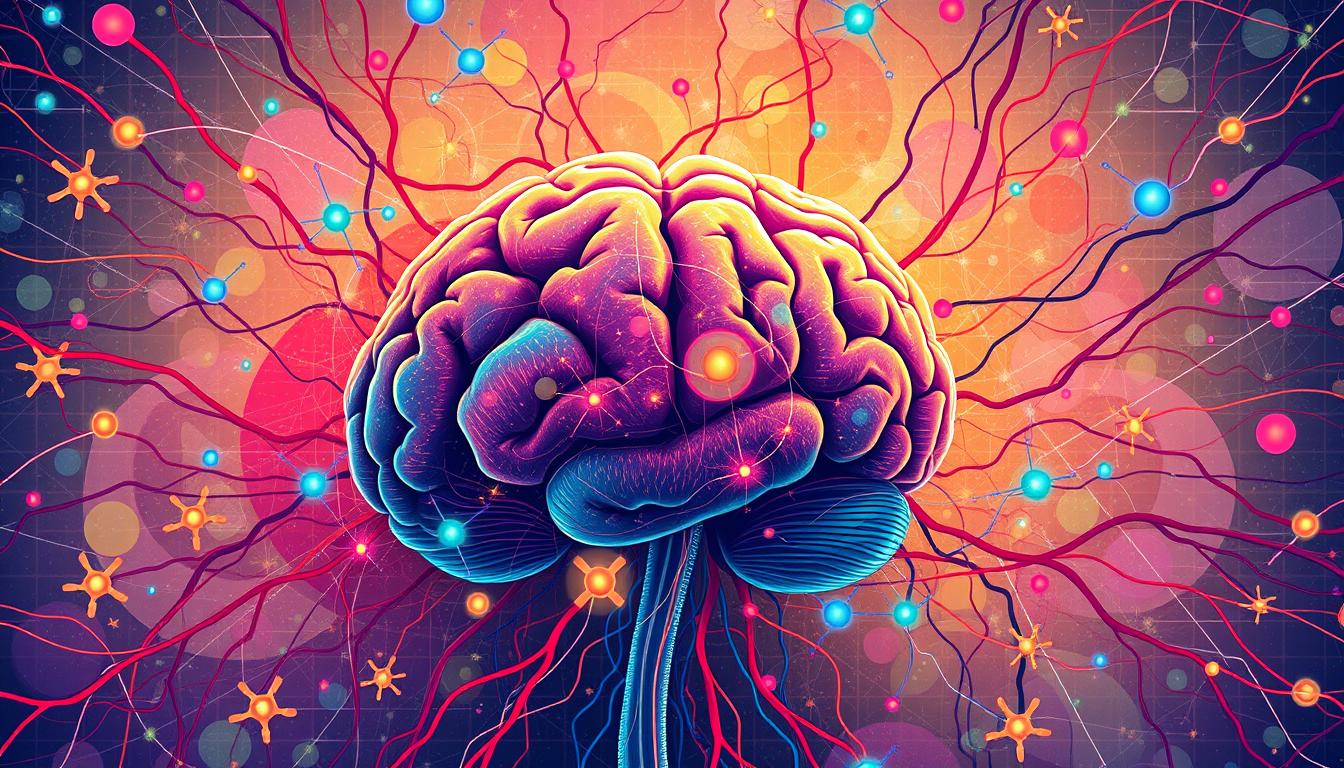
The human brain is truly amazing, made up of billions of neurons and trillions of connections. Brain anatomy is a field that shows us how complex it is. It reveals the structures and functions that help us think and learn.
At the brain’s core are the neurotransmitters. These are chemical messengers that help neurons talk to each other. Messengers like dopamine, serotonin, and acetylcholine are key in controlling our cognitive processes. They help with our mood, memory, learning, and making decisions.
“The brain is the most complex object in the known universe. It’s the command center for everything we do, from breathing to feeling to thinking.”
The brain’s network of pathways lets it handle lots of information. This lets us see the world, remember things, and make choices. Its ability to change and adapt is key for learning and healing.
Understanding the brain is a big challenge, but we’ve already learned a lot. As neuroscience keeps growing, we’ll find out even more about our brains.
The Energy Consumption of the Brain
The human brain is incredibly powerful, despite its small size. It uses a lot of the body’s energy. In fact, the brain only makes up 2% of our body weight but eats up to 20% of our energy.
This high energy use shows how complex and active the brain is. It works hard, even when we’re sleeping.
The brain needs a lot of energy to keep neurons talking and to handle thinking tasks. Neurons, the brain’s messengers, need energy to send signals. They get this energy from breaking down glucose, even when we’re not actively thinking.

Not all parts of the brain use the same amount of energy. Some areas need more power to do their jobs. For example, the part of the brain that handles vision uses more energy when we’re looking at things.
“The brain is the most energy-intensive organ in the body, consuming up to 20% of the body’s total energy resources.”
Learning about the brain’s energy use is key for scientists and doctors. It helps us understand how efficient the brain is. It also helps in treating brain diseases, where energy problems can be a big issue.
How the Brain Communicates
The human brain is amazing, always talking through complex networks of neurons. At the center of this talk are neurotransmitters, chemical messengers. They help transfer information between brain cells. These messengers are key to many brain functions and cognitive processes.
When a neuron gets excited, it sends out neurotransmitters into the gap between cells. The next neuron then picks up these messengers. This makes it either more active or less active. This smooth exchange lets the brain handle lots of tasks, like sensing the world, moving, and feeling emotions.
“The brain is the most complex organ in the human body, and it is responsible for our thoughts, emotions, and behaviors. Understanding how the brain communicates is essential for unlocking the secrets of the mind.”
By looking into the neurotransmitter systems, scientists have learned a lot about the mind. This knowledge has led to new treatments for many mental and neurological issues. It has greatly improved life for millions of people.
As we learn more about how the brain talks, we open up new ways to use our minds. We can get better at thinking and find new ways to help with brain problems. The future of brain research is very promising for making life better for everyone.
Memory Formation and Storage
The human brain is truly amazing, especially when it comes to memory. Memory helps us learn, remember, and use information every day. It’s key to our thinking and actions.
Creating and storing memories is a complex task for the brain. It involves brain functions like encoding, storing, and recalling information. The cognitive processes like attention and perception are also crucial. These steps happen in different parts of the brain, working together to form and store memories.
“The human brain is the most complex structure in the known universe, with an estimated 86 billion neurons and over 100 trillion synaptic connections.”
The hippocampus, in the temporal lobe, is key for making new memories. The prefrontal cortex helps in encoding and recalling memories. Meanwhile, the amygdala is important for the emotional side of memory.
Memory gets stronger during sleep, a process called consolidation. This shows how important brain functions and cognitive processes are for a healthy memory.
The Brain’s Plasticity
The human brain is amazing, able to adapt and change in incredible ways. This ability, called brain plasticity, is key to how our brains grow, learn, and work. By learning about brain plasticity, we discover more about Brain Development and the fascinating Human Brain Facts.
Brain plasticity means the brain can change its structure and function. This happens when we change our behavior, environment, or how our brain works. So, our brains are not fixed; they are always changing and growing to meet our needs.
“The brain has a remarkable ability to change and adapt, even in adulthood. This process of neuroplasticity is essential for learning, memory, and recovery from injury.”
One cool thing about Brain Plasticity is how it helps us learn and remember. When we learn new things, our brains make new connections. This is why practicing and repeating what we learn is so important. It makes these connections stronger and more efficient.
Brain Plasticity is also key for recovery after brain injuries. If part of the brain gets damaged, other parts can take over. This helps people regain lost abilities and adjust to their new situation.
As we delve deeper into the Human Brain and its Brain Development, Brain Plasticity will keep being a vital area of study. It gives us insights into the brain’s incredible complexity and ability to adapt.
Sleep’s Role in Brain Function
The human brain is amazing, and sleep greatly affects its performance. Brain Functions and Cognitive Processes are closely linked to sleep. Many Human Brain Facts show this connection.
When we sleep, our brain works hard to solidify memories. It turns the day’s learning into long-term storage. Without enough sleep, this process fails, making it hard to learn and remember new things.
“Sleep is the golden chain that ties health and our bodies together.” – Thomas Dekker
Sleep also helps our brain adapt to new experiences. This ability, called neuroplasticity, is key for learning and solving problems. Without sleep, our brain’s flexibility is lost, harming Brain Function.

Not getting enough sleep can really hurt our brain. It can make us less able to make good decisions and be less creative. It even raises the risk of depression and anxiety. So, it’s crucial to get enough sleep for our brain’s health.
Sensory Processing in the Brain
The human brain is amazing, handling lots of sensory info from our surroundings. It has different sensory cortices for each type of input. For example, the primary visual cortex deals with what we see, and the auditory cortex handles sounds.
The brain’s Brain Anatomy is set up to understand our world. But it’s not just about recognizing things. The brain’s complex network of neurons and pathways work together. They help us see patterns, recognize faces, and grasp complex situations.
“The brain is the most complex object in the known universe, and it’s responsible for our entire experience of the world.”
Sensory processing is a true wonder of the human brain. It shows how amazing our Brain Anatomy and Cognitive Processes are. These help us understand and interact with the world.
Emotional Processing and the Brain
The human brain is incredibly complex and plays a key role in how we feel. Structures like the amygdala are crucial for our emotional experiences. The amygdala is often called the “emotional center” of the brain. It handles emotional stimuli, especially fear, anxiety, and other negative feelings.
Emotional intelligence is vital for our brain’s functions. It lets us recognize, understand, manage, and reason with emotions. The amygdala works with other brain areas, like the prefrontal cortex, to control our emotional reactions and decisions. This teamwork helps us understand the world and make choices.
“The brain is the most complex structure in the universe. It is the center of intelligence, interpreter of senses, initiator of body movement, and controller of behavior.” – Marian C. Diamond
Learning about the brain’s role in emotions helps us understand ourselves better. It also impacts mental health, relationships, and human behavior. By exploring emotional intelligence and brain functions, we uncover the amazing human brain facts that define us.

Brain Development Over a Lifetime
The human brain is amazing, always changing and growing. It starts developing early and keeps adapting as we get older. This ability to grow and change is truly incredible.
In our early years, the brain grows fast. New connections and pathways form quickly. This early growth shapes our thinking, feelings, and social skills.
As we get older, the brain keeps changing. It adapts to new experiences and challenges. This shows how flexible and adaptable our brains are.
Our brains keep evolving even into old age. While some abilities may slow down, the brain can still learn and remember. This is thanks to activities, a healthy lifestyle, and learning new things.
“The brain is the only organ that can rewire itself in response to experience.” – Michael Merzenich, neuroscientist
Learning about our brain’s development helps us use it to its fullest. It helps us live a life full of learning and growth.
Fascinating Facts About Brain Disorders
Our brains are complex organs. When their functions are disrupted, the effects can be huge. We’ll look at some interesting facts about neurological disorders. These facts show how brain problems can affect behavior, thinking, and health.
Did you know that Alzheimer’s disease is a major cause of dementia? It happens when abnormal proteins build up in the brain. This messes up how neurons talk to each other, causing memory loss and other problems. Studies show that staying active and keeping the brain sharp can help slow down Alzheimer’s.
“The brain is the last and greatest biological frontier, the most complex thing we have yet encountered in our universe.” – James D. Watson, co-discoverer of DNA
Neurological Disorders like Parkinson’s disease really mess with movement. It’s caused by the loss of brain cells that make dopamine. This leads to shaking, stiffness, and trouble moving. But, some people with Parkinson’s find relief from music, showing how the brain can change in response to sounds.

The Brain Functions and Human Brain Facts are amazing. Studying brain disorders helps us understand how complex our brains are. As we learn more, we might find better ways to treat and prevent many brain diseases.
The Future of Brain Research
Our knowledge of the human brain is growing fast. New tools like functional magnetic resonance imaging (fMRI) and positron emission tomography (PET) are giving us deep insights. They help us understand how the brain works and how we think.
New technologies like brain-computer interfaces and neural prosthetics are changing the game. They offer hope for treating diseases like Alzheimer’s and spinal cord injuries. Also, non-invasive methods like transcranial magnetic stimulation (TMS) are being explored. They might improve our brain function and thinking skills.
Artificial intelligence and machine learning are also making a big impact. They can sift through huge amounts of brain data. This could lead to new insights into Brain Functions, Human Brain Facts, and Cognitive Processes. As these technologies advance, they promise to change how we see the human mind and improve our health.