
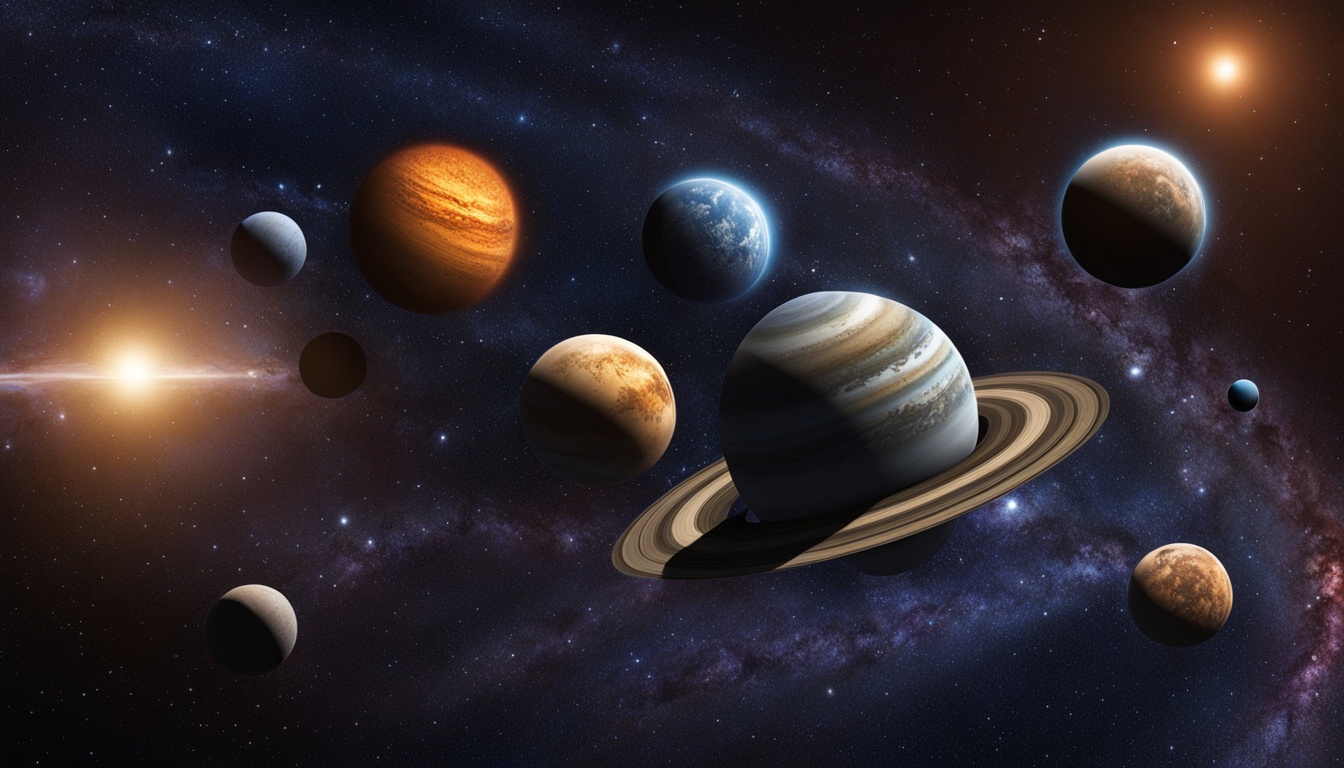
Astronomy has been a key part of scientific discovery, uncovering the universe’s secrets. It has grown our knowledge of the cosmos from ancient times to today’s space exploration. This article looks at ten major discoveries that changed how we see the stars and planets.
These findings have widened our scientific knowledge and sparked the imagination of people everywhere. They inspire new generations of astronomers and space fans to explore more. Let’s explore the amazing stories behind these discoveries that changed our view of the universe.
Unveiling the Cosmic Enigmas
Astronomers and scientists have always been fascinated by the stars and the universe. They have explored the cosmos, uncovering secrets and mysteries. Their work has changed how we see the universe.
Probing the Celestial Tapestry
With new telescopes and tools, astronomers have looked deeper into space. They’ve learned about stars, galaxies, and other space wonders. This knowledge helps us understand the universe better.
Unraveling Ancient Mysteries
Looking at ancient astronomy has also been key to understanding the universe. By studying old records, scientists have learned how ancient people saw the stars. This mix of old and new knowledge helps us solve mysteries that have puzzled us for years.
The Expanding Universe Revelation
The discovery of the expanding universe changed how we see the cosmos. Astronomers like Edwin Hubble found the redshift of distant galaxies. This led to the Big Bang theory, which says the universe started from a hot, dense state and keeps getting bigger.
Hubble saw the redshift in galaxy light, showing the universe is expanding. The more distant a galaxy is, the more its light is shifted towards red. This proved that galaxies are moving away from us. This finding changed our view of the universe’s beginning.
These discoveries about the universe’s expansion changed our understanding of space and time. They showed us the universe is always changing. This has led to new areas of study and exploration.
Exoplanets: Worlds Beyond Our Solar System
The discovery of exoplanets has changed how we see the universe. These planets orbit stars outside our solar system. They let scientists explore alien environments and look for life beyond Earth.
Decoding Alien Environments
Astronomers keep finding and studying exoplanets. They’ve found everything from huge gas giants to small, rocky planets. These worlds vary a lot in size, make-up, and how they move around their stars.
By looking at their atmospheres and temperatures, scientists learn about the conditions for life. This helps them understand if other planets could support life.
New ways to find exoplanets have led to many discoveries. With more techniques coming, we expect to find many more planets. This new era of exploration is exciting. Researchers are eager to learn more about these distant worlds and if they could have life.
Science: The Driving Force Behind Discovery
The heart of amazing space discoveries is the endless search for scientific knowledge. The scientific method guides us with its careful testing and experiments. It has led to big changes in how we see the universe.
Things like powerful telescopes and new theories have changed our view of space. Astronomers and researchers have worked hard. They’ve gathered data, looked for patterns, and questioned old ideas to learn about the stars.

The scientific method has been key in these discoveries. It’s about observing, making guesses, and testing them. Scientists keep pushing limits, slowly revealing the universe’s secrets.
As we explore the mysteries of space, the scientific method leads the way. It helps astronomers make big discoveries that change how we see things. The drive for scientific knowledge has led to huge advances in astronomy. It will keep shaping our understanding of the universe.
The Cosmic Microwave Background
The cosmic microwave background (CMB) is a faint signal from the early universe. It gives us key clues about how our cosmos formed and evolved. First spotted in 1964, it’s a key proof of the Big Bang theory. It shows the universe started in a hot, dense state and has been cooling and expanding ever since.
Echoes from the Big Bang
The CMB, or cosmological background radiation, fills the universe with electromagnetic waves. It looks the same in every direction, hinting at its origins from the early Big Bang. This glow tells us a lot about the universe’s early days, like its age, makeup, and how it changed over time.
Studying the CMB has greatly helped us understand the Big Bang theory. Tiny changes in its temperature and polarization reveal the universe’s hidden structure. This includes dark matter and dark energy, big mysteries in modern science. By looking at these patterns, scientists have built a detailed picture of the early universe. This shows the CMB as a remnant of the Big Bang.
Black Holes: Cosmic Enigmas Unveiled
Black holes have always fascinated scientists. These mysterious objects are known for their strong gravity and event horizons. They keep leading to new discoveries that change how we see spacetime.
Scientists are learning more about black holes and their role in the universe. They study how black holes affect spacetime and how to spot them. This research has greatly expanded our knowledge of these cosmic mysteries.
Black holes play a big part in shaping galaxies and the universe. They control the movement of stars and matter flow. This makes them key to understanding extreme cosmic events.
Thanks to new discoveries, scientists are getting closer to solving the black hole mystery. They’re learning more about the universe and how matter, energy, and spacetime interact.
Dark Matter: The Missing Pieces of the Puzzle
In the vast universe, there’s a mysterious substance that’s hard to see but crucial for understanding galaxies. This substance, called dark matter, has been a puzzle for scientists for years. Its gravity is clear, but it’s invisible. Now, scientists are more focused on figuring out this mystery.
Dark matter doesn’t give off or reflect light, making it hard to spot. But its gravity affects galaxies and the universe’s expansion. Scientists have seen these effects in many studies, showing how important dark matter is.
Gravitational Anomalies Unmasked
Scientists found dark matter by looking at gravitational anomalies. By watching how galaxies move and how light bends around big objects, they found something invisible but heavy. This discovery has helped us understand how galaxies and the universe are structured.
The search for dark matter is ongoing, with scientists using many methods and tools. They’re looking into everything from particle physics to astronomy. Finding dark matter could change how we see the universe and our place in it.
The Accelerating Universe: Dark Energy’s Role
In the last 20 years, astronomers have found something big that changed how we see the universe. They looked at distant supernovae and saw how they move away from us. This showed that the universe is not just getting bigger, but it’s getting bigger faster. This change is thanks to something called dark energy.
Dark energy is a mysterious force that pushes the universe apart. It’s different from gravity, which pulls things together. Dark energy makes the universe expand faster and faster. This idea changed our view of the universe, which used to be seen as stable.
Looking at far-off stars and galaxies helped us understand this. These objects move away from us, and their light changes color. This change, called redshift, tells us the universe is speeding up its expansion.

This new discovery has led to more research in understanding the universe. Scientists are trying to figure out what dark energy is and where it comes from. They want to know how it will affect the universe’s future and our understanding of physics.
Gravitational Waves: Ripples in Spacetime
The discovery of gravitational waves has changed science a lot. These waves, which are like ripples in spacetime, were predicted by Einstein. They were finally found, starting a new area of study in astronomy.
LIGO has been key in this big find. It uses advanced detectors to catch signs of huge events in space, like black holes merging. This confirms Einstein’s ideas and lets us see extreme things in the universe.
Gravitational waves change how we see spacetime and physics. They let us study violent events in space, like black holes colliding. By looking at these waves, scientists can learn more about the universe and how it works.
As we keep studying gravitational waves, we’ll uncover more secrets of the universe. The future looks exciting, with many new discoveries waiting to be made. We’re diving deeper into the mysteries of our universe.
The Cosmic Web: Mapping the Universe’s Structure
Astronomers have discovered the cosmic web, a complex network of galaxies, dark matter, and gas. This vast network shows us the universe’s large-scale structure. It helps us understand how galaxies form and where dark matter is found.
Unveiling the Cosmic Tapestry
Scientists have used advanced mapping to chart the cosmic web. They’ve traced the patterns of matter across the universe. By looking at how galaxies cluster together, they found the hidden dark matter that shapes the cosmos.
This work has changed how we see the universe’s evolution. It shows how the universe went from being uniform to the complex web we see now.
The cosmic web is always changing, moving under gravity’s pull. Galaxies move towards each other, making the web stretch and change. This shows us the universe’s history and what it might look like in the future.
By studying these changes, scientists learn more about galaxy formation and the universe’s structure. This helps us understand the universe better.
Astronomical Imaging Breakthroughs
The field of astronomy has seen huge leaps in imaging tech. These advances have changed how we see the cosmos. Telescopes on Earth and in space let us take amazing pictures and collect a lot of data.
NASA and the European Space Agency (ESA) have been key in creating new imaging methods. These have expanded our view of space. The Hubble Space Telescope and the James Webb Space Telescope have shown us the universe in ways we never thought possible.
New tech in sensors, image processing, and data analysis has helped us learn more about space. Pictures of far-off galaxies, nebulae, and exoplanets amaze us and help scientists. They are key to understanding how our universe began and changed over time.
As we keep exploring with new imaging tech, the future looks bright. Next-generation telescopes and teamwork between agencies will likely reveal more about the universe. This will grow our knowledge and inspire new explorers and thinkers.
The Multiverse Theory: A Paradigm Shift
The idea of the multiverse has caught the eye of scientists and the public. It challenges how we see the universe. This new idea comes from advances in string theory and quantum mechanics. It says there are many universes, just like ours, living together.
This theory says our universe is just a small part of a big network of universes. Each one has its own laws and features. This idea makes scientists look deeper into the universe’s secrets. They explore the idea of other dimensions and versions of us in other worlds.
As we learn more about quantum mechanics, the multiverse theory gets more popular. It gives us new ways to think about our universe’s beginning and growth. It talks about the cosmic microwave background, dark matter, and dark energy. The multiverse theory shows us a universe much bigger and more complex than we thought.