
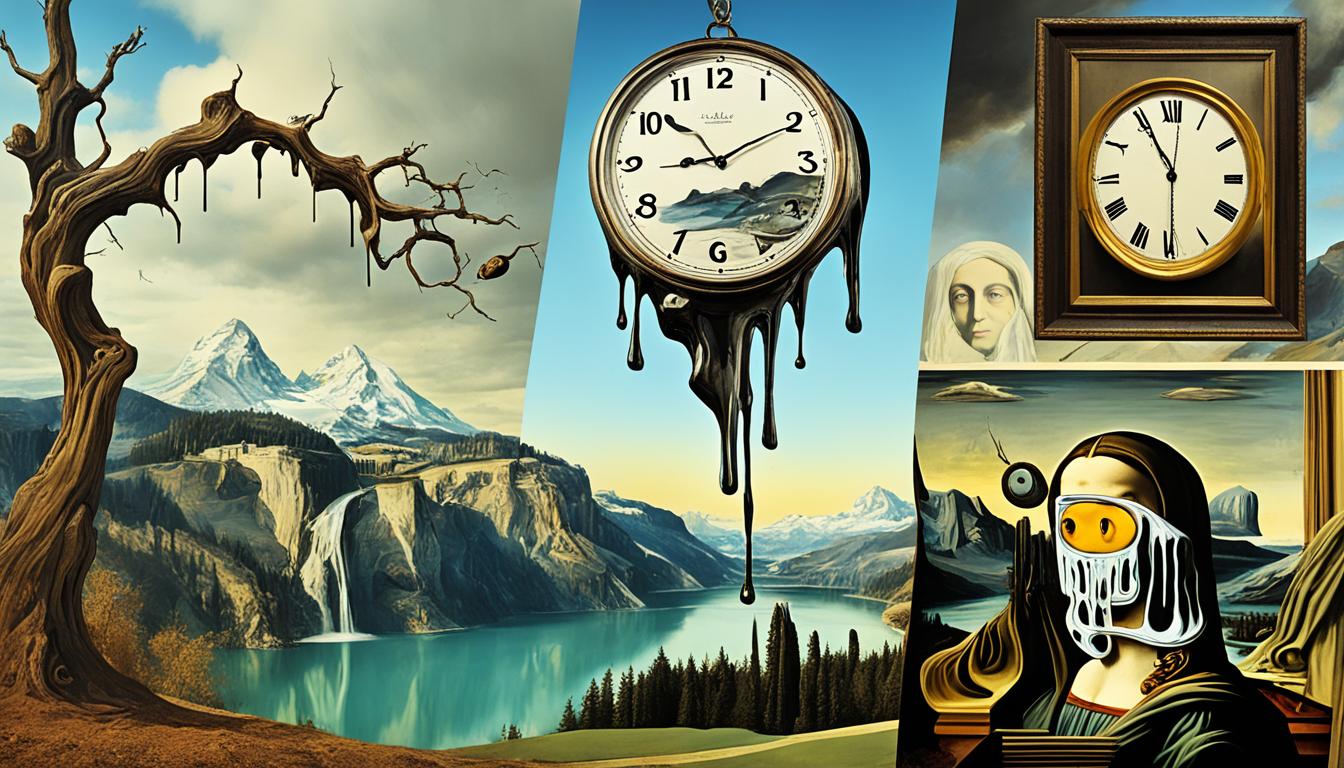
The world of art is full of captivating stories and hidden secrets. These secrets often challenge what we think we know. From the Mona Lisa’s mysterious smile to Picasso’s Guernica, even famous artworks have surprising backstories. Get ready to see famous artworks in a new light as we share 10 weird facts that reveal the strange and unexpected.
Did you know the Mona Lisa’s smile might be due to a medical condition? Or that “The Scream” by Edvard Munch came from a personal experience of a natural event? Works by Rembrandt and Salvador Dalí also have unique stories. Each piece of art has a story that’s waiting to be discovered. Prepare to be amazed by the strange and interesting truths behind some of the world’s most famous art.
Unraveling the Bizarre: Peculiar Truths Behind Art Masterpieces
In the world of art, some stories are more intriguing than others. Let’s dive into the art trivia and find the odd truths that change how we see famous masterpieces. From Rembrandt’s The Night Watch to Edvard Munch’s The Scream, these stories will make you rethink art.
Unexpected Revelations that Defy Conventional Perceptions
Let’s uncover the hidden facts behind famous art. These stories are often stranger than fiction. Get ready for deep insights and backstories that change how we see these masterpieces.
Exploring these art truths helps us appreciate art more. It shows the creativity and depth of human experience. Let’s dive into art trivia and find the hidden beauty that makes these pieces special.
Mona Lisa’s Mysterious Smile: Decoding Da Vinci’s Enigmatic Masterpiece
The Mona Lisa, created by Leonardo da Vinci, has fascinated people for over 500 years. This portrait, known for its mysterious smile, has led to many theories. It’s one of the most talked-about artworks in history.
Leonardo da Vinci painted the Mona Lisa from 1503 to 1519. The smile has been closely examined. Some think it shows off Leonardo’s sfumato technique, which blends colors for depth and mystery. Others believe it symbolizes “the jocund lady,” representing eternal feminine beauty.
There might be more to this famous painting than meets the eye. Scholars have many theories, from linking the Mona Lisa to the divine feminine to seeing her as Leonardo’s self-portrait. The Mona Lisa’s smile, and similar enigmatic expressions in art, have intrigued people for years. They push us to explore the mysteries behind these masterpieces.
The Scream: Edvard Munch’s Haunting Expression of Existential Angst
Edvard Munch’s The Scream is a famous and deeply moving artwork. It has become a symbol of our deepest fears and feelings of despair. This piece shows the power of art to express complex emotions and the human experience.
Exploring the Psychological Depths of a Cultural Icon
Munch’s own battles with mental health and the chaos of his time are seen in The Scream. The figure in the painting screams in a way that touches our hearts. It shows the deep feelings we all have, like fear, loneliness, and the search for purpose.
With The Scream, Munch turned his personal struggles into a work that still moves us today. This piece by Edvard Munch shows how art can face and deal with life’s biggest questions. It proves the lasting impact of art on our understanding of the world and ourselves.
Guernica: Picasso’s Powerful Protest Against the Horrors of War
The painting Guernica by Pablo Picasso is a strong protest against war’s devastation. It was made after the bombing of the Spanish town of Guernica during the Spanish Civil War. This piece shows the suffering and destruction war causes.
Picasso’s Guernica is a key work against war, mixing surrealism with strong feelings. The painting’s broken figures and dark colors show chaos, pain, and the horror of war.
Symbolism and Surrealism Converge in a Visceral Masterpiece
The symbols and surrealism in Guernica make it powerful. Picasso used symbols like broken limbs and a crying mother with her dead child. These show the deep pain war brings. The surreal style makes the feelings in the painting stronger and more moving.
Guernica shows Picasso’s talent and his strong belief in using art for social change. This piece still moves and inspires people. It reminds us of the need to face war’s truths and strive for peace.
Fun Facts: Bizarre Backstories of Renowned Artworks
Explore a world of art trivia and discover the strange stories behind famous paintings. These tales of unexpected inspirations and quirky creation will change how you see these masterpieces.
Did you know the Mona Lisa’s smile might be due to a medical issue? Experts think Lisa Gherardini, the subject, had mild strabismus. This could have made her smile look unique, adding to the painting’s mystery.
“The Starry Night” by Vincent van Gogh has a fascinating story too. It was inspired by his own life and the latest science on the universe. Van Gogh mixed art and science, creating a masterpiece that still stuns us today.
Learn more about these and other odd facts about famous paintings. These stories reveal the hidden tales behind iconic artworks. They show the unexpected inspirations and quirks of their creation, adding depth to our appreciation.
The Night Watch: Rembrandt’s Unconventional Portrayal of a Militia Group
Rembrandt’s “The Night Watch” is a standout piece that breaks the mold of traditional group portraits. It was made during the Dutch Golden Age. This painting shows Rembrandt’s unique way of capturing the lively movement and unique traits of the militia.

This painting is unlike the usual group portraits of its time, which often had stiff, formal poses. Rembrandt’s “The Night Watch” is full of life and energy. It uses light, shadow, and composition to make the scene feel like it’s happening right before our eyes.
The militia members, from the leader to the young drummer, are shown with great detail and emotion by Rembrandt. This makes the painting feel real and engaging.
By going against the usual group portrait style, Rembrandt’s “The Night Watch” stands out as a masterpiece of the Dutch Golden Age. It proves Rembrandt’s skill in showing the energy and uniqueness of his subjects. This work has made him a true legend in art.
The Persistence of Memory: Dalí’s Melting Clocks and Surreal Landscapes
Salvador Dalí’s “The Persistence of Memory” is a masterpiece that symbolizes the surrealist movement. It uses dreamlike images and symbols to dive deep into our subconscious. This invites us to see the hidden parts of our minds.
The painting’s key feature is its melting clocks. These clocks show how time is fleeting and our reality is fragile. They look like they’re melting, making us question our world’s solidity.
Exploring the Subconscious Mind Through Dreamlike Imagery
Dalí’s art is full of surrealism, blending the normal with the strange. The melting clocks sit in a desolate scene, making us feel uneasy. This mix of everyday and odd makes us think about our deepest thoughts and feelings.
“The Persistence of Memory” makes us think about reality and the line between our conscious and subconscious minds. It’s a painting that keeps captivating us, showing how surrealism in art can deeply explore the human experience.
Banksy’s Subversive Street Art: Provocative Messages in Public Spaces
Banksy, an anonymous British street artist, is known for his bold and provocative art. He challenges societal norms and shares strong political messages. His street art is in public places, letting him share his views and highlight big social and political issues.
One of his famous works is “Girl with Balloon.” It shows a young girl trying to get a heart-shaped balloon. This simple image stands for hope and resistance. Banksy uses it to talk about consumerism and how fragile life can be.
His art often looks at wealth gaps, the environment, and power misuse. He makes people think differently about the world. Banksy’s street art makes us see things from new angles.
Banksy’s art is not just eye-catching but also makes you think deeply. By using public spaces, his art reaches many people. It starts conversations about big social and political issues. His work, like a mural of a protestor or a stencil of a child saluting, is a strong way of sharing political views. It keeps inspiring people all over the world.
The Garden of Earthly Delights: Hieronymus Bosch’s Fantastical Triptych
The Renaissance was a time of endless creativity and artistic discovery. Hieronymus Bosch’s The Garden of Earthly Delights is a masterpiece that has amazed art lovers for centuries. It’s a triptych filled with surreal and symbolic images. This work has become a symbol of Renaissance art, challenging our usual views and sparking many interpretations.
Deciphering the Surreal Symbolism of a Renaissance Masterpiece
Bosch’s work is full of strange creatures and interesting details. The central panel shows a magical garden with odd figures and fantastical elements. It’s a great example of Bosch’s unique way of using symbols. Scholars have many theories about what the work means, from a look at human nature to a warning about the risks of sin.

Looking at the triptych, you enter a world that mixes the real with the surreal, the holy with the worldly. Bosch’s skill with color, texture, and layout creates a dreamlike effect. This shows his innovative take on Renaissance art, hinting at the surrealism of the 20th century.
The Garden of Earthly Delights still fascinates art lovers, encouraging them to explore Hieronymus Bosch’s unique vision. It’s a Renaissance masterpiece that continues to leave a lasting impact.
The Starry Night: Van Gogh’s Swirling Brushstrokes and Celestial Visions
Vincent van Gogh’s masterpiece, The Starry Night, has touched the hearts of art lovers globally. This post-impressionist painting shows off Van Gogh’s unique style and deep connection to nature. Its swirling brushstrokes and stunning night sky have made it a symbol of his artistic vision.
The painting captures the energy of the stars and moon in the sky. Below, a peaceful village lies under a tall church steeple. This mix of calm and dynamic elements creates a deep emotional impact.
The Starry Night is one of the most famous paintings in the world. It shows Van Gogh’s genius and his deep bond with nature. Its lasting popularity proves the strength of Van Gogh’s vision and his ability to express the human experience through art.