Genetics has always fascinated people. It’s the study of how traits are passed down. At its core is DNA, the genetic code that makes us who we are. Scientists have made incredible discoveries about DNA over the past century.
In 1953, James Watson and Francis Crick discovered the DNA double helix. This changed how we see genetic information. Their work helped us understand how traits are inherited.
Genetics has grown a lot since then. We now know more about genes and how they work. We’ve learned how DNA affects our looks, health, and even our chances of getting sick.
Let’s explore the world of genetics together. We’ll see how it has changed our view of life and ourselves.
Introduction to Genetics
Genetics is a field that explores our heredity. It helps us understand what makes us unique. It looks at genes, which are the basic units of inheritance.
Genetics has a long history, starting with Gregor Mendel’s work on inheritance. Today, it includes molecular biology. This is the study of how genes work and are passed on.
“Genetics is a roadmap to our individuality, revealing the unique tapestry that makes each of us one-of-a-kind.”
At its heart, genetics studies heredity. It shows how traits are passed down through generations. By studying genes, researchers have made big advances in health and medicine.
Exploring genetics reveals the complex makeup of our genetic traits. It shows us what makes each person special. The study of genetics is fascinating and leads to new discoveries about ourselves.
The Structure of DNA
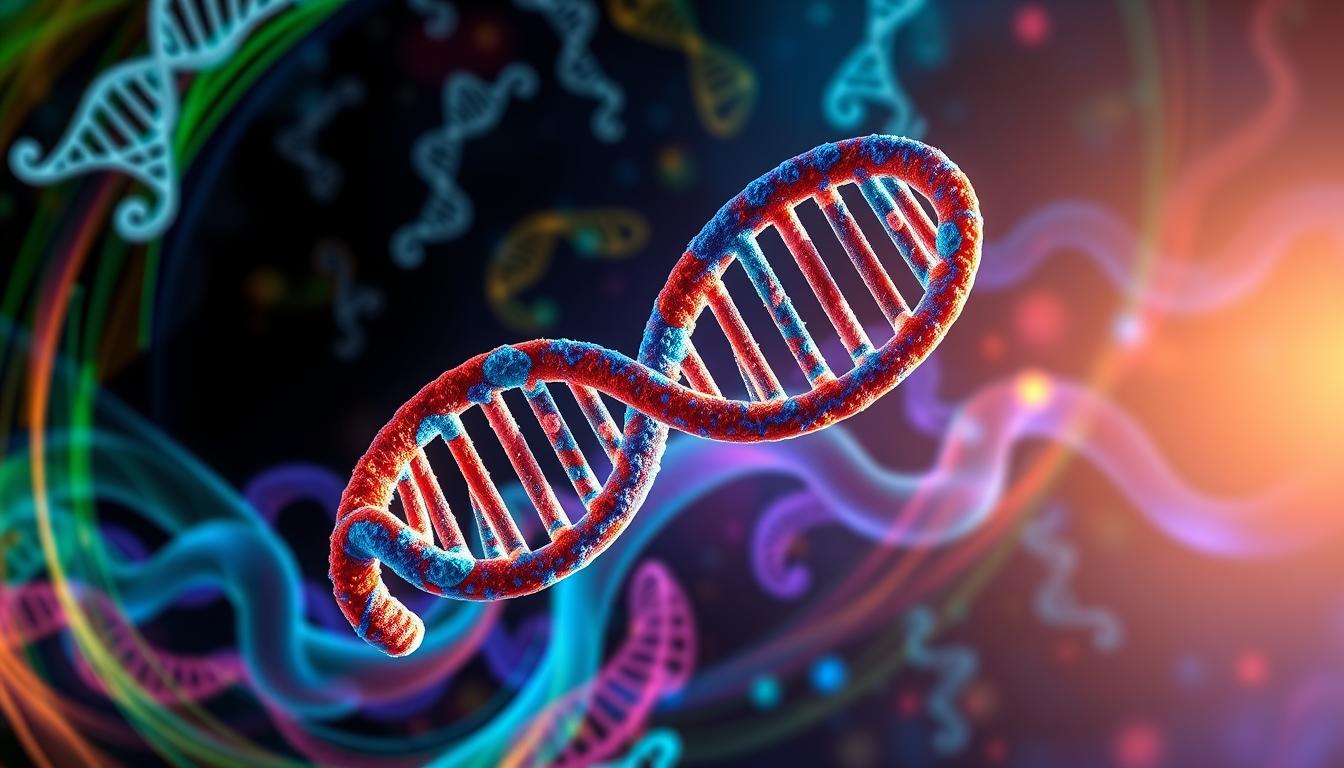
DNA, or deoxyribonucleic acid, is the basic building block of life. It has two strands that twist together, forming a double helix shape. These strands are made of smaller units called nucleotides. They carry the genetic code for all living things.
Each nucleotide has a sugar molecule, a phosphate group, and one of four bases: adenine (A), thymine (T), guanine (G), or cytosine (C). Adenine pairs with thymine, and guanine pairs with cytosine. This pairing system is key to the genetic code that guides life.
“The double helix is a constantly changing structure, twisting and untwisting as it moves through the cell, reproducing itself with perfect precision time after time.”
The way nucleotides are arranged and the sequence of the genetic code in the double helix define an organism’s traits. Knowing how DNA works is vital for understanding life and advancing science.

The Role of Genes in Our Lives
Our genes shape who we are. They decide our physical traits like hair color, eye color, and height. They also affect our risk for certain diseases. Genes are the basic units of heredity, making us unique.
Genetic expression is complex. It’s how genes guide the creation of proteins and molecules. Our environment, like what we eat and our lifestyle, can change how genes work. This affects our health and well-being.
“Genes load the gun, but environment pulls the trigger.”
Knowing about genes is important. It helps us predict and prevent genetic disorders. It also guides personalized medical treatments. It even helps us understand our behaviors and traits.
As we learn more about genetics, we’ll see its impact more. Our genetic makeup shows the amazing complexity and diversity of human life. From eye color to disease risk, our genes are fascinating.
Genetic Variation and Its Importance
Genetic variation is key in the evolution and adaptation of species. It shows how organisms change with their environment. This idea is vital for understanding how life adapts to new situations.
Genetic variation comes from mutations, recombination, and gene flow. These actions bring new genes into a population. This diversity is what natural selection works on, helping populations evolve.
The role of genetic variation is huge. It helps species adapt to new diseases, climate changes, or when resources are scarce. Populations with more genetic diversity can better face environmental challenges. This ensures the survival and growth of the species over time.
“Genetic variation is the foundation of the evolutionary process, allowing organisms to adapt to changing environments and challenges.”
Keeping genetic diversity is key for saving endangered species and keeping ecosystems healthy. By protecting habitats and genetic resources, we help species evolve and adapt. This is crucial for their survival.
In short, genetic variation is essential for species to adapt and evolve. Understanding its importance helps us protect our natural world. This way, we ensure the resilience of life on Earth.
Tools and Techniques in Genetic Research
In the world of Genomics, researchers use advanced tools and techniques. DNA sequencing is a key tool that lets scientists read our genetic code. It helps them understand the human genome in new ways.
The polymerase chain reaction (PCR) is also crucial. It makes it possible to study small DNA parts with great detail. This is very important for genetic research.
CRISPR technology is a major breakthrough. It lets scientists edit DNA with high precision. This opens up new areas in genetic engineering and medicine.
“The tools and techniques of genetic research have transformed our understanding of the human genome, paving the way for advancements that were once unimaginable.”
These new methods and the hard work of researchers have made Genomics grow fast. As we learn more about our genetic code, the possibilities for discovering life’s secrets are endless.
Genetic Disorders and Their Impact
In the world of genetics, we explore the complex world of genetic disorders. These inherited diseases come from small changes in our genes. They create big challenges that can change lives a lot.
Conditions like cystic fibrosis and Huntington’s disease show how wide-ranging these disorders are. Scientists are working hard to find the causes. They aim to create treatments that can help people live better lives.
“Genetic disorders are a testament to the complexity and resilience of the human genome, challenging us to delve deeper into the mysteries of life itself.”
The effects of genetic disorders go beyond just the person affected. They touch families and communities too. Facing the emotional, physical, and financial struggles can be tough. But, people’s strength and hope always shine through.

As we learn more about our genes, we see a brighter future. We might find better ways to treat or even prevent these inherited diseases. The journey ahead is filled with both obstacles and discoveries. It leads us to understand more about our genes and our future.
The Human Genome Project
The Human Genome Project was a major effort to map the human DNA sequence. It started in 1990 and ended in 2003. Scientists from all over worked together to understand our genetic code.
This project used new DNA sequencing technology. It gave us a full view of the human genome. This led to big advances in genomics research.
The Human Genome Project changed how we see genetics and health. It found the DNA parts linked to diseases. This led to personalized medicine and new treatments.
It also helped make better tools for finding and treating genetic diseases early. This is a big step forward in health care.
The project also boosted the field of genomics. It let researchers study human traits and disease risks. This helped us understand how genes and environment interact.
The Human Genome Project’s impact is still growing. As we learn more about DNA, we’ll find new ways to fight diseases. This will help us diagnose and treat many health issues better.
Ethics in Genetic Research
Genetics is advancing fast, and we must tackle its ethical sides. Bioethics helps us deal with the complex issues of genetic engineering and gene therapy.
Genetic info can reveal a lot about our health, raising privacy and discrimination concerns. It’s important to balance science with protecting our rights.
“The more we learn about the human genome, the more we realize the complex ethical questions that arise from this knowledge.”
Genetic engineering, like CRISPR, can change our DNA. It might cure diseases but also raises big questions. We worry about changing life’s basics and the ethics of creating a “designer” human.
As genetics grows, we need strong bioethics and open talks. Thinking deeply about genetic research’s ethics helps science benefit everyone. It keeps our values of dignity and justice alive.

Genetic Testing: Pros and Cons
Genetic testing is key in personalized medicine. It helps people understand their genetic makeup. This knowledge can guide health choices. But, there are both good and bad sides to consider.
Genetic testing can spot genetic links to diseases. This info helps people manage their health better. Genetic counseling is vital in making sense of test results. It helps understand health implications for oneself and family.
Yet, there are worries about privacy and misuse of genetic data. Genetic info could lead to discrimination or distress. Also, not everyone has equal access to personalized medicine based on genetics.
“Genetic testing is a powerful tool, but it must be used with great care and consideration for the individual’s well-being and privacy.” – Dr. Emily Williamson, Genetic Counselor
It’s important to view genetic testing with a balanced view. Weigh the benefits against the risks. Working with healthcare pros, like genetic counselors, helps make smart choices. This ensures genetic testing improves overall health and life quality.
The Future of Genetics
The field of genetics is growing fast, with new discoveries every day. Biotechnology and gene editing are leading the way to big changes in medicine. Soon, doctors might tailor treatments just for you, changing healthcare forever.
Gene editing is a big deal. It lets scientists change DNA with great accuracy. This could help get rid of genetic diseases and make us better in many ways. But, we must think carefully about the ethics of this new technology.
“The future of genetics is not just about curing diseases, but also about enhancing human potential in ways we can scarcely imagine.”
Personalized medicine is also changing healthcare. Doctors can now use your genes to find the best treatments. This means better health outcomes and fewer side effects. It’s a big step towards better health for everyone.
The mix of biotechnology, gene editing, and personalized medicine is exciting. It could lead to new ways to improve our lives and health. While there are questions about ethics, the benefits are huge.

Conclusion
The field of genetics has given us a deep look into human DNA and the genetic code. We’ve learned about DNA’s structure and how genes affect our lives. This knowledge has led to big steps forward in science, medicine, and more.
Genetic discoveries have changed how we see healthcare and disease prevention. They’ve also made us think more about the ethics of genetic research. Looking ahead, genetics will keep changing how we understand heredity and tackle health challenges.
The story of genetics is one of amazing discovery and endless possibility. By exploring this field, we can unlock the secrets of our genes. This will help us understand life better and shape a brighter future.