
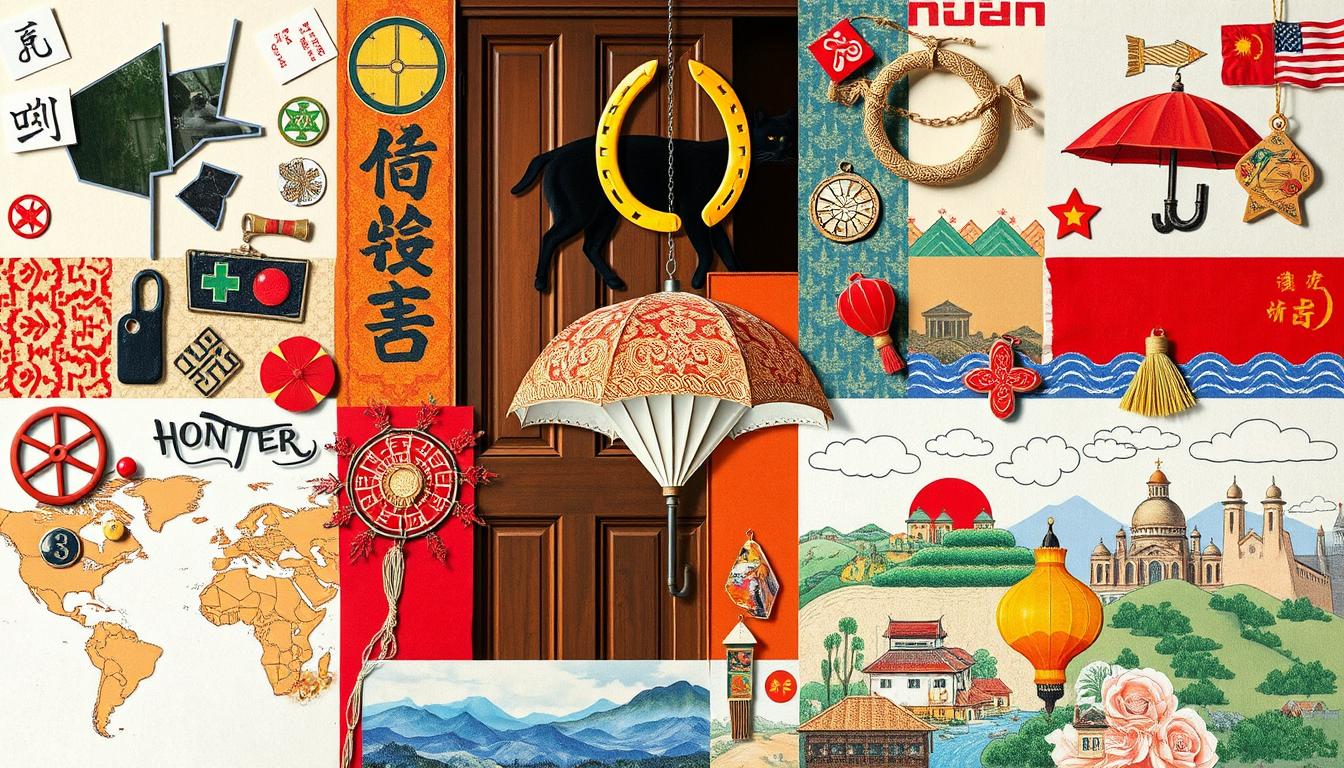
Superstitions are a fascinating part of our lives, found in cultures all over the world. They go back to ancient times and are still seen today. We’ll explore the amazing world of cultural superstitions, showing how spiritual beliefs and folklore traditions shape our societies.
These beliefs often come from a need to understand and control the unknown. We see this in actions like avoiding black cats or tossing coins into fountains. By looking at global superstitions, we gain insight into the human experience and how our beliefs influence our lives.
Superstitions vary greatly, from China’s feng shui to the rituals of indigenous tribes. We’ll take a journey through these traditions, discovering the captivating stories that have amazed people for ages.
Understanding Cultural Superstitions
Superstitions are a big part of our culture, shaping how we believe and act. They come from our need to make sense of the world and feel in control. By exploring the psychology behind these beliefs, we learn more about our minds and the lasting impact of tradition.
Superstitions vary worldwide, influenced by personal stories and social norms. In some places, numbers, colors, or animals carry special meanings. For example, in the West, 13 is seen as unlucky, while in East Asia, 4 is feared.
“Superstitions are the shadows of true beliefs.”
– Mikalojus Konstantinas Čiurlionis, Lithuanian artist and composer
These myths help us deal with life’s unknowns and find control. By following certain rituals or avoiding bad luck, people feel safer and more at ease.
Exploring cultural superstitions reveals the intricate mix of personal psychology, social influences, and tradition. Understanding these beliefs gives us a deeper look into human experiences and the strength of our minds.
Superstitions Relating to Numbers
The world of Magical Rituals, Ancient Customs, and Mystical Symbolism is deeply tied to numbers. The fear of the number 13 in Western cultures and the honor of 8 in Chinese traditions are just a few examples. These superstitions have interesting origins and histories.
In many Western countries, the number 13 is seen as unlucky. This leads to avoiding it in many situations, like skipping the 13th floor in buildings. The belief in bad luck for the number 13 comes from ancient religious and mythological beliefs.
“The number 13 is considered unlucky in many cultures, with the belief that it brings bad luck or misfortune. This superstition has its roots in various religious and cultural traditions, and it continues to be a prevalent superstition in modern times.”
On the other hand, the number 8 is highly respected in Chinese culture. It’s linked to Magical Rituals and Ancient Customs because it looks like the Chinese word for “prosperity” or “wealth.” The sound of the number 8 also sounds like the Chinese word for “wealth.” So, the number 8 is used in Mystical Symbolism for important events, like Chinese weddings and business decisions.
These different beliefs about numbers show how Magical Rituals, Ancient Customs, and Mystical Symbolism shape our views of the world. Exploring these superstitions helps us understand the diversity and complexity of human beliefs and practices.
Animal Superstitions
Animal superstitions are big in folklore and cultural traditions. They range from the bad luck of black cats to the ominous hoot of owls. These beliefs have lasted through time and across the globe, influencing Cultural Taboos and Folklore Traditions everywhere.
The black cat is a well-known superstition. In many places, seeing a black cat is thought to mean bad luck. This belief comes from ancient Egypt, Greece, and Europe. But in some Asian cultures, black cats are seen as lucky, showing how different Cultural Taboos can be.
“A black cat crossing your path is a sign of bad luck, or so they say. But in Japan, it’s quite the opposite – a black cat is thought to bring good fortune.”
Owls have also been tied to many Supernatural Omens and Folklore Traditions. In some cultures, their calls are seen as signs of death or bad luck. Yet, in others, owls are seen as wise and protective. The idea that an owl’s hoot near a home means death is a long-standing superstition.
Spiders have also been surrounded by Cultural Taboos and Folklore Traditions. In some places, spiders are seen as good luck, while in others, they’re believed to bring bad luck or even evil spirits. These Supernatural Omens have led to many beliefs and rituals around the world.
Food Superstitions in Different Cultures
Food is deeply connected to cultural superstitions, ancient customs, and myths worldwide. These beliefs guide what we eat and when. They show how food is linked to the spiritual world.
In many Asian cultures, the number four is seen as unlucky. It sounds like the word for “death.” So, people avoid meals with four courses or dishes with four ingredients. On the other hand, the number eight is lucky because it means prosperity. This is why dishes with eight parts are popular.

In Latin America, black beans are thought to bring luck. They are eaten at the start of the new year. In the American South, eating collard greens and black-eyed peas on New Year’s Day is believed to bring financial success.
“Food superstitions are not just about the food itself, but about the symbolic meaning and cultural significance it holds.”
These food beliefs are found everywhere, not just in certain places. People use different ingredients and cooking methods to follow old customs and myths. This shows how food superstitions, ancient customs, and myths shape our food culture.
Color Superstitions Across Cultures
Colors have a deep spiritual meaning in many cultures worldwide. They carry Mystical Symbolism and Spiritual Beliefs. The way we see and understand colors changes a lot, depending on Cultural Taboos and local traditions.
In Asian countries, red is seen as lucky, bringing good fortune and fertility. But in Western cultures, black is often linked to mourning and bad luck. The color white is pure and sacred in Eastern religions. Yet, in some African cultures, it means death and spirituality.
“The way we perceive color is deeply rooted in our cultural and religious backgrounds, shaping our beliefs and superstitions.”
Color-based Spiritual Beliefs and Cultural Taboos shape many practices and traditions. They influence everything from wedding clothes to the colors of homes and churches. Knowing the Mystical Symbolism of colors helps us appreciate cultural diversity and respect different societies’ views.
Exploring color superstitions reveals a lot about Spiritual Beliefs and Mystical Symbolism. It shows how these ideas have influenced Cultural Taboos and traditions globally.
Superstitions Surrounding Good Luck
In the world of Magical Rituals and Folklore Traditions, good luck is a fascinating topic. People use everything from crossing fingers to carrying lucky charms. These practices are found in many cultures and have roots in ancient beliefs.
Crossing your fingers is a well-known good luck ritual. It’s believed to bring protection and divine help. This tradition comes from early Christianity, where the cross was used to fight off evil and bring good fortune.
“Crossing fingers is a symbolic gesture that dates back to pagan times when it was believed to invoke the protection of the gods.”
Lucky charms like four-leaf clovers and horseshoes are also popular. People carry or display these items to attract good luck and avoid bad. These beliefs come from ancient times, when certain objects were thought to have magical powers.

The lasting nature of these good luck superstitions shows our deep need to control life’s unpredictability. By doing these rituals, people feel more secure and hopeful, even when faced with fears and uncertainty.
Bad Luck Superstitions to Avoid
In the world of Supernatural Omens and Societal Myths, some superstitions are linked to bad luck. These beliefs have shaped how people behave and think globally. They often lead to actions taken to avoid bad luck.
The fear of breaking a mirror is a well-known superstition. It’s believed to bring seven years of bad luck. This comes from an ancient idea that mirrors hold a piece of the soul. Breaking a mirror was thought to break that connection, leading to bad fortune.
“A broken mirror is said to bring seven years of bad luck, a belief that has persisted for centuries across many cultures.”
Walking under a ladder is another common superstition. It comes from the ladder’s triangular shape, seen as the Holy Trinity. Walking through this was seen as disrespectful and inviting bad luck.
These Societal Myths and Cultural Superstitions still affect us today. Many people avoid breaking mirrors or walking under ladders. This shows how Supernatural Omens shape our collective psyche.
As we explore Supernatural Omens and Cultural Superstitions, keeping a balanced view is key. We should understand these beliefs’ historical value but also question their truth. By knowing where these superstitions come from, we can make better choices about their role in our lives.
Regional Superstitions in America
Across the United States, different regions have their own Folklore Traditions and Ancient Customs. These have created a rich tapestry of Spiritual Beliefs. From the Pacific Northwest to the Deep South, each area has its own superstitions. These reflect the local culture and natural environments.
In the Appalachian region, stepping on a sidewalk crack is seen as bad luck. It’s believed to bring misfortune. In the Southwest, Native American tribes respect the raven. They see it as a symbol of wisdom and positive change. In the Northeast, breaking a mirror is thought to bring seven years of bad luck, a belief from ancient folklore.
“Superstitions are the shadows of true beliefs.” – Leigh Hunt
These regional Spiritual Beliefs enrich American culture. They show the lasting impact of Folklore Traditions and Ancient Customs. Exploring these superstitions across the nation helps us appreciate America’s unique diversity.

Superstitions Tied to Holidays
The world of Cultural Taboos, Magical Rituals, and Mystical Symbolism is vast. It goes beyond everyday superstitions. It also shapes how we celebrate holidays and special occasions. Different cultures have their own beliefs and traditions tied to these celebrations.
In many Asian cultures, the number 4 is seen as unlucky, linked to death. So, during the Lunar New Year, people avoid the number 4 in decorations and gifts. The color red, which means good luck and prosperity, is everywhere during these celebrations.
“Superstitions and cultural beliefs have a profound impact on the way we celebrate our most cherished holidays and traditions.”
In the West, the black cat is seen as unlucky, especially on Halloween. Many people try to avoid black cats or keep them away during this holiday. This belief comes from the Mystical Symbolism linked to witchcraft and the occult.
Holiday superstitions are a big part of our celebrations. From winter solstice rituals to Thanksgiving food taboos, these beliefs are deep-rooted. Understanding these superstitions helps us appreciate the unique traditions that make our holidays special.
Myths and Legends: Where Superstitions Originated
Superstitions have been a part of human history for a long time. They come from Folklore Traditions and Ancient Customs. These beliefs, filled with Supernatural Omens, have been passed down through generations.
The superstition about the number 13 is well-known. It started with the Last Supper, where 13 people were present. Jesus and his 12 apostles were there, with Judas being the 13th. This event, along with negative views of the number in many cultures, made 13 unlucky.
“The number 13 has long been considered unlucky, with its origins rooted in ancient myths and legends.”
Black cats being unlucky also has a history. In medieval Europe, they were seen as witches’ companions. This belief grew stronger with their link to the devil and the occult.

Even though some superstitions seem strange, they still affect us today. They show the lasting impact of Folklore Traditions and Ancient Customs. As we face the modern world, these Supernatural Omens still capture our interest and shape our beliefs.
Modern Takes on Traditional Superstitions
In today’s fast world, old superstitions have changed to fit new ways of life. Millennials and Gen Zers have mixed old beliefs with new digital trends. This shows how culture and technology blend.
Social media has brought new myths and fears to the forefront. Influencers and online creators shape what we think and believe. They spread superstitions far and wide through their content.
The world is more connected than ever, leading to the mixing of superstitions. This mixing creates a rich mix of beliefs that go beyond borders. It shows how global culture shares superstitions.