
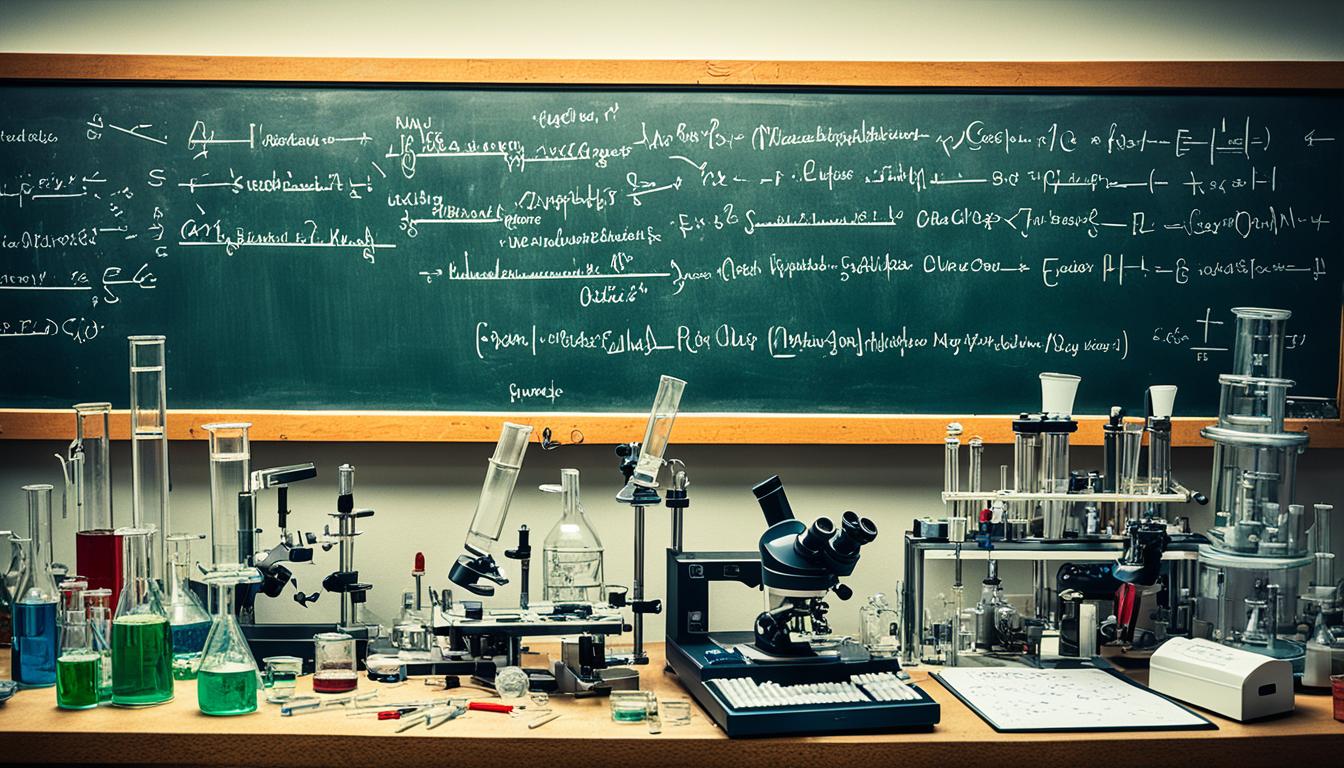
Spark your child’s curiosity and start a fun learning journey with a home science lab. It’s perfect for parents wanting to boost their child’s STEM skills or adults keen on discovering science. This guide offers practical tips and advice for setting up a space for science experiments and projects.
Turning a home corner into a science lab opens up endless possibilities. You can do simple chemistry experiments or build robots. With the right setup and tools, you’ll help your kids develop a love for science. They’ll get to explore the mysteries of the natural world.
Transforming a Space into a Science Sanctuary
Turning a part of your home into a science lab is thrilling for young scientists. First, pick a spot in your home that can become a science haven. Think about the space size, how easy it is to get to, and the need for good air flow and safety steps.
Identifying a Suitable Area
Choose a spot for your science lab that has enough room and is easy to reach. Stay away from small or messy areas since you’ll need space for your science tools and safe experiments. It should have lots of natural or adjustable light to help with your science work.
Setting Up Proper Ventilation and Safety Measures
Good air flow is key for a home science lab. Find a spot with good air movement or put in a ventilation system for a safe space. This keeps the temperature, humidity, and air clean, which is important for many experiments. Also, make sure it’s safe by setting clear rules, keeping dangerous stuff locked up, and following safety steps.
By picking and getting ready your home science lab space, you’ll make a place where you can dive into science, try things out safely, and keep loving discovery.
Essential Equipment for Budding Scientists
Starting a science journey means having the right tools and equipment. If you’re into chemistry, biology, or physics, you’ll need the basics. Let’s look at the key items that turn your home into a place of discovery.
Basic Tools and Instruments
Every science lab needs the right tools and instruments. Begin with beakers, test tubes, pipettes, and microscopes. These tools let you do many experiments and make observations. A digital scale is also key for measuring things accurately, and safety gear like goggles and gloves is a must.
As you get into more advanced science, think about getting specialized gear. Things like pH meters, Bunsen burners, and dissection kits can help you explore more. Always put safety first and follow the instructions when using lab supplies.
Setting up a home science lab is thrilling. With the right equipment, you’ll be able to do meaningful experiments, make discoveries, and keep loving science all your life.
Chemistry Corner: Building a Miniature Lab
Are you curious about chemistry and want to explore it yourself? Your own home is the perfect place to start! Creating a mini chemistry lab at home is both exciting and educational. With the right equipment and safety measures, you can enjoy the world of chemical reactions and experiments.
First, make sure your space has good airflow and is safe. You’ll need goggles, gloves, and a fire extinguisher. After setting up safety, gather basic tools like beakers, test tubes, and a hotplate. Also, have common household chemicals ready, such as baking soda, vinegar, lemon juice, and salt. These can spark many fun chemistry experiments at home.
With your lab ready, you can dive into various experiments. You might study how pH indicators change colors or explore crystal growth. A home chemistry lab is a great way to learn and discover new things. Let your inner chemist come alive!
Biology Basics: Exploring the Living World
Start your journey into biology with a home lab. You’ll learn about key tools like microscopes. We’ll show you how to collect and study plants and small animals. Enjoy the thrill of seeing the living world up close.
Microscopes and Specimen Collection
Every home biologist needs a microscope. Get a good one to see tiny details. Begin by collecting samples like leaves, insects, or pond water. Look at them under the microscope to spark your curiosity and learn more about biology.
Plant and Animal Studies
Include plants and small animals in your lab. Use a terrarium or vivarium to watch them grow and act. Keep an eye on their needs like water, light, and temperature. This way, you’ll see the living world’s beauty and learn about biological systems.
Exploring the home biology lab, biology experiments at home, and plant and animal studies at home will spark your interest in science. Use the microscope for home science lab to explore the exciting world of biology.
Physics Fun: Hands-on Experiments
Explore the exciting world of physics with fun experiments at home. This guide will help you learn about simple machines and mechanics. You’ll see how the physical world works right in your own space.
Simple Machines and Mechanics
Discover the amazing world of simple machines like levers and pulleys. These experiments at home show the laws of motion and forces in our daily lives. You’ll enjoy learning how things move and work.
With simple machines experiments, learn about mechanical advantage, friction, and energy transfer. Make catapults, build bridges, and explore magnets. The home physics lab is full of exciting activities.
These mechanics experiments will deepen your understanding of science in our world. They also improve critical thinking and problem-solving skills. Enjoy the excitement of scientific discovery and learn about the universe, one experiment at a time.

Science Projects for All Ages
If you’re a parent wanting to spark your kids’ interest or an adult looking to dive back into science, this section is for you. We offer a variety of science projects and activities perfect for your home science lab. These projects cater to both kids and adults, ensuring everyone can have fun and learn.
Age-Appropriate Activities
Science projects vary greatly in complexity and interest. We’ve put together a range of activities for different age groups. Kids can enjoy simple yet fascinating projects like building circuits or growing crystals. Adults can tackle more challenging experiments, like making miniature rockets or studying light properties.
Fostering a Love for Science
Creating a lifelong love for science means making it fun, interactive, and accessible. Our projects aim to spark curiosity, promote critical thinking, and deepen your understanding of the world. They’re perfect for both beginners and experts, encouraging everyone to continue exploring science at home.
Safety First: Precautions and Best Practices
Starting a home science lab is thrilling, but safety comes first. By following key safety tips, you can make your lab safe and responsible. This ensures everyone’s safety during your scientific experiments.
First, keep chemicals and equipment away from kids and label everything clearly. Use strong shelves and containers to avoid accidents. Learn about the safety data sheets (SDS) for each item. They tell you how to handle and store things safely.

Good airflow is also vital for safety. Place your lab near windows or use a ventilation system. This helps get rid of harmful fumes and particles.
Have a first-aid kit, fire extinguisher, and a plan for emergencies ready. Teach everyone in your family these plans. Keep important phone numbers easy to find. This way, you can safely enjoy science at home.
Sourcing Materials on a Budget
Setting up a home science lab doesn’t have to be costly. With creativity and resourcefulness, you can find affordable science lab equipment and supplies. Repurposing everyday items can help you save money and get what you need for your science projects.
Repurposing Household Items
Items like mason jars, empty plastic bottles, and kitchen tools can become useful in your science lab. A Mason jar can be a mini terrarium or a petri dish. Plastic bottles work well for physics experiments. And things like funnels, measuring cups, and coffee filters can be used in chemistry and biology.
Online Resources and Local Suppliers
Online is also a great place to find affordable science lab materials. Websites like Amazon, eBay, and educational supply stores have a lot of options. You can also look at local hardware stores, thrift shops, and garage sales for deals on science supplies.
By using these strategies, you can set up a great home science lab without spending a lot. Repurposing items and checking online can help you save money. This way, you can keep your scientific curiosity alive and inspire others.
Inspiring Young Minds with Science
The goal of a home science lab is to spark curiosity in young minds. It aims to make them explore the scientific world. By offering hands-on learning, you help grow the next scientists and innovators. They learn to investigate, experiment, and discover the world.
Science education boosts critical thinking and problem-solving skills. It also deepens understanding of the natural world. Through fun activities and experiments, kids learn about chemistry, biology, and physics. This makes science exciting and prepares them for the future.
It’s important to encourage a child’s curiosity in science. Let them ask questions, make observations, and test hypotheses. This approach creates a sense of wonder and keeps them eager to learn more. By creating a safe space, you help them overcome science-related fears. This builds a lifelong love for learning.