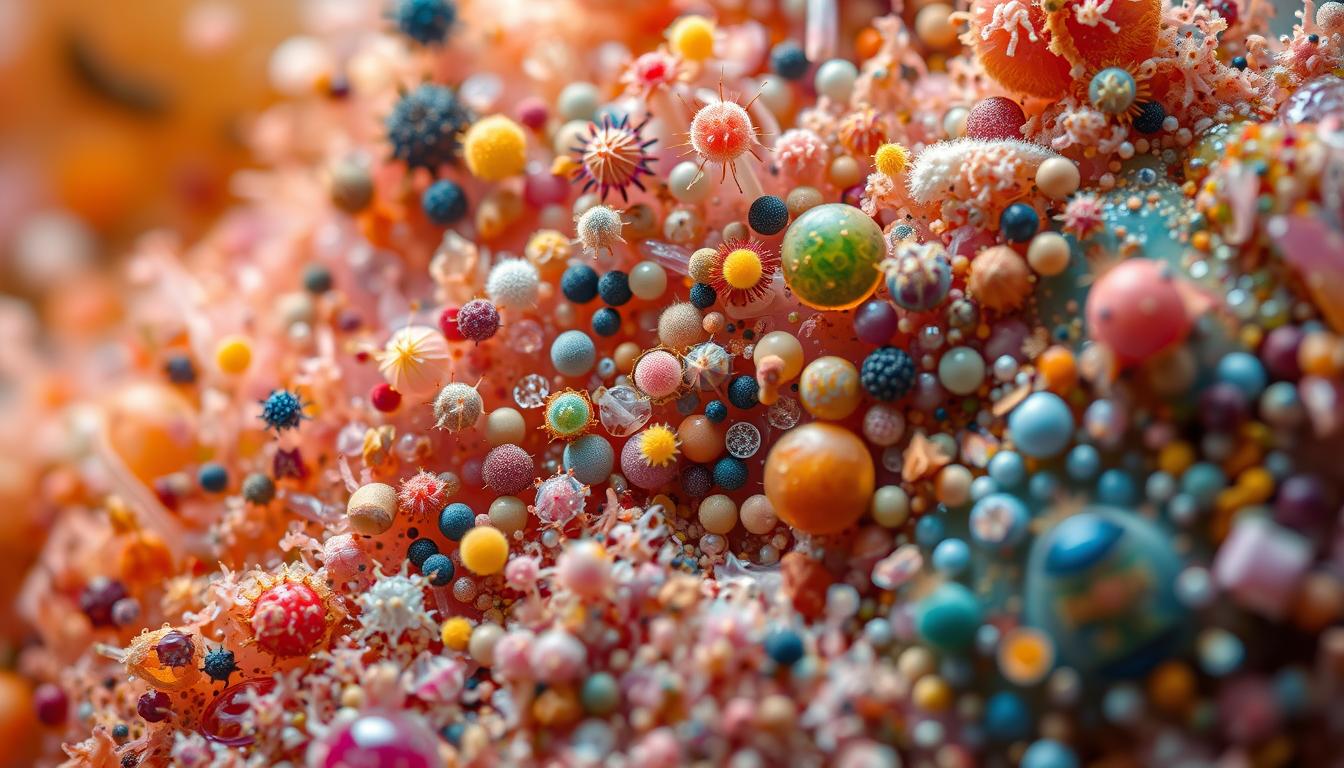
Explore the world of microbiology, where tiny life forms like bacteria, viruses, and fungi are key. They affect everything from the air we breathe to our food. These microorganisms have a big impact on our health and the environment.
This article dives deep into microbiology. We’ll see the good and bad sides of these tiny beings. You’ll learn about the benefits, risks, and new research on the microbiome. The microbiome is the community of microbes in our bodies and the world.
Join us on a journey into the world of microbes. We’ll discover their amazing abilities and how they interact. You’ll be amazed by how these tiny creatures shape our lives in ways we’re still learning about.
Understanding Microbiology: The Basics of Microbes
Microbiology is a field that explores the tiny world of microorganisms, or microbes. These tiny life forms, like bacteria, viruses, fungi, and more, are key to our world. They affect our lives every day.
Microbes are everywhere, from the ocean’s depths to our guts. They vary in shape and size. Knowing about microbiology helps us understand how microbes interact with our world.
“Microbiology is the study of microscopic organisms, such as bacteria, viruses, fungi, and protozoa. These organisms can be found in every imaginable environment, from the depths of the ocean to the human body.”
Bacteria are single-celled, prokaryotic organisms. They come in many shapes and sizes. They’re very adaptable and can thrive in many places, playing important roles in ecosystems.
Viruses, however, are tiny infectious agents. They need host cells to multiply and spread. They can cause diseases in humans and other living things.
Fungi are eukaryotic microorganisms that are also vital. They live in soil, on decaying matter, and in our bodies. They help keep our microbiome healthy. Learning about these microbes helps us understand nature and improve our health.
The Benefits of Microbes in Our Daily Lives
Microorganisms are often ignored but are crucial to us. They help in food production and waste management. They also play a big role in industrial processes, improving our lives greatly.
In food microbiology, microbes are key. They ferment foods like cheese, yogurt, and bread, adding flavor and keeping them fresh. Beneficial bacteria in foods like kimchi and sauerkraut boost gut health and strengthen our immune system.
Microbes are also vital in biotechnology. They help make biofuels, medicines, and break down waste. Their ability to live in many places makes them key to sustainable living, reducing harm to our planet.
“Microorganisms are the unsung heroes of our world, quietly working behind the scenes to enhance our lives in countless ways.”
Beneficial bacteria are essential for our daily lives. They keep soil fertile and help make vitamins and enzymes. As we learn more about microbes, their benefits will grow, shaping our future and environment.

Microbes and Human Health: The Good, the Bad, and the Ugly
The world of microbes is complex, with both good and bad species in our bodies. Immunology research shows that some microbes help keep our immune system healthy. These “good” microbes, part of the human microbiome, help us fight off diseases.
But, there’s also a dark side. Harmful pathogens can cause serious diseases. From the common cold to deadly illnesses, these invaders harm our bodies. It’s important to study these diseases to find treatments and prevent them.
“The greatest threat to human health in the 21st century may be the emergence and spread of new infectious diseases.” – Dr. Anthony Fauci, Director of the National Institute of Allergy and Infectious Diseases
Finding a balance between microbes and human health is key. Immunology researchers study how our microbiome and immune system interact. They aim to use the benefits of good microbes while fighting off harmful ones. This understanding is vital for our health and well-being.

The Impact of Microbes on the Environment
The world of microorganisms is key to keeping our environment balanced. These tiny lifeforms, known as environmental microbes, are crucial for our planet’s health.
They work in the soil and oceans, driving important processes that keep our planet alive. They help turn organic matter into nutrients for plants and animals. Their work in soil is vital, making it fertile for forests and farms.

But microbes do more than just help plants grow. In environmental microbiology, they show their power in cleaning up pollution. They break down harmful chemicals and help fix oil spills, making our ecosystems healthier.
As we face big environmental problems, using biotechnology to tap into microbes’ abilities is key. Scientists are finding new ways to use microbes for energy and to reduce carbon emissions.
“Microbes are the unsung heroes of our planet, playing a vital role in maintaining the delicate balance of our environment. Their influence is far-reaching, from sustaining soil fertility to cleaning up our most pressing ecological challenges.”
The world of environmental microbes is full of possibilities. As we learn more about them, we’ll be able to protect our planet better.
Microbiology in the Biotechnology Industry
In the world of biotechnology, microbes are key to innovation and solving big problems. They help in making medicines, genetic engineering, and industrial processes better. Microbiology’s role in biotechnology is huge and changing the game.
Microbes are essential in making important medicines. Bacteria and fungi can be made to create drugs and vaccines. This is a cheaper and more efficient way than making them from scratch.
“Microbes are the unsung heroes of the biotechnology industry, facilitating the development of life-saving treatments and driving sustainable solutions.”
Microbiology also helps in environmental and food science. Microorganisms can clean pollutants, make biofuels, and improve food’s nutritional value. This tackles big issues like sustainability and food security.

The biotechnology field is always growing, and microbes are at the heart of it. They are changing medicine and helping the environment. Their abilities are set to shape our future.
Exploring Microbial Diversity: Where They Live
The world of microorganisms is truly awe-inspiring. It spans the globe, from the ocean depths to mountain tops. These tiny lifeforms have adapted to survive and thrive in diverse habitats.
Microorganisms can live in many environments, even those harsh for larger life. Extremophiles thrive in extreme conditions like high temperatures and low oxygen. This shows their incredible ability to adapt.
“Microorganisms are the most abundant life forms on Earth, and they play crucial roles in shaping the environment and maintaining the balance of ecosystems.”
In the human body, a complex community of microbes, called the microbiome, exists. They are found in various organs and tissues. These microbes are vital for our health and well-being.
Beyond the human body, microbes inhabit many environments. Researchers study their role in ecosystems and their uses in bioremediation and sustainable agriculture. This field explores how microorganisms shape our world.
The Fascinating World of Pathogens
In our world, microbes are key – they help and harm us. Pathogens, a special group, cause diseases. These diseases come from viruses, bacteria, and fungi and affect our health a lot.
Viruses are mysterious and take over host cells. They can harm our body’s defenses. Bacteria can be harmless or deadly, causing many illnesses. Fungi can also be harmful, leading to respiratory and skin problems.
“The greatest enemy of knowledge is not ignorance, it is the illusion of knowledge.”
– Daniel J. Boorstin
It’s important to know how pathogens work in our bodies. This knowledge helps us fight diseases. From the common cold to big pandemics, finding ways to stop these diseases is crucial.
New pathogens keep coming, pushing us to be stronger. Microbiology is leading the way in finding solutions. We aim to create better treatments and ways to keep everyone safe from these threats.
The Future of Microbiology: Trends and Innovations
Looking ahead, microbiology is set for exciting changes. New discoveries in biotechnology, immunology, and environmental microbiology will change our lives. These advancements promise to bring about significant transformations.
The study of the human microbiome is particularly fascinating. It involves the trillions of microbes living inside us. Scientists are learning how these microbes affect our health. This knowledge could lead to new treatments for many diseases.
Environmental microbiology is also seeing big breakthroughs. Scientists are finding ways to use microbes to clean up pollution. This includes making eco-friendly fuels and cleaning contaminated areas.
Synthetic biology is another area making great progress. Researchers are creating microbes with specific traits. This could lead to new medicines, materials, and even help in space exploration.
The future of microbiology is full of possibilities. It offers a chance to understand and use the invisible world around us. This could greatly improve our health, environment, and more.
Engaging with Microbiology: Education and Resources
Microbiology is the study of tiny living things. It opens doors for those who love the unseen world. Whether you’re looking into a career or just want to learn more, there’s a lot to explore.
The National Institutes of Health (NIH) and the Centers for Disease Control and Prevention (CDC) have great online resources. They offer guides and courses on topics like biotechnology and fighting diseases. The American Society for Microbiology (ASM) also has educational programs, conferences, and chances to meet other microbiologists.
For those who like to get their hands dirty, many schools have programs in microbiology. These programs help students learn how to solve big problems in health and the environment. Internships and research projects give students real-world experience and help them grow in their field.