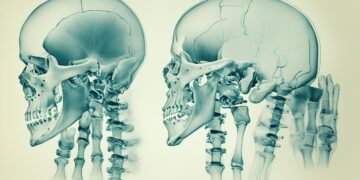
Fossils are amazing pieces of ancient life that have lasted for millions of years. They give us a peek into how life evolved and how our world changed. Scientists study fossils to learn about old species, their ways of life, and where they lived.
Fossils let us see back in time to when life first started on Earth. They show us everything from huge dinosaurs to tiny bugs. Each fossil can change how we see the past. By looking at fossils closely, scientists can piece together the history of life on Earth.
Fossils also tell us a lot about our planet. They help us understand old climates, how the Earth changed, and how life evolved. By studying fossils, scientists learn about the past and how life and the environment interacted.
The study of fossils is key to understanding our planet’s past. By studying these ancient remains, we learn about life on Earth and how it has survived. As we find more fossils, we can learn even more about our past and future.
Understanding Fossils and Their Importance
Fossils are the remains or traces of ancient life, giving us a peek into Earth’s past. They are key to understanding how life evolved, the structure of ancient ecosystems, and the changes our planet has seen over time.
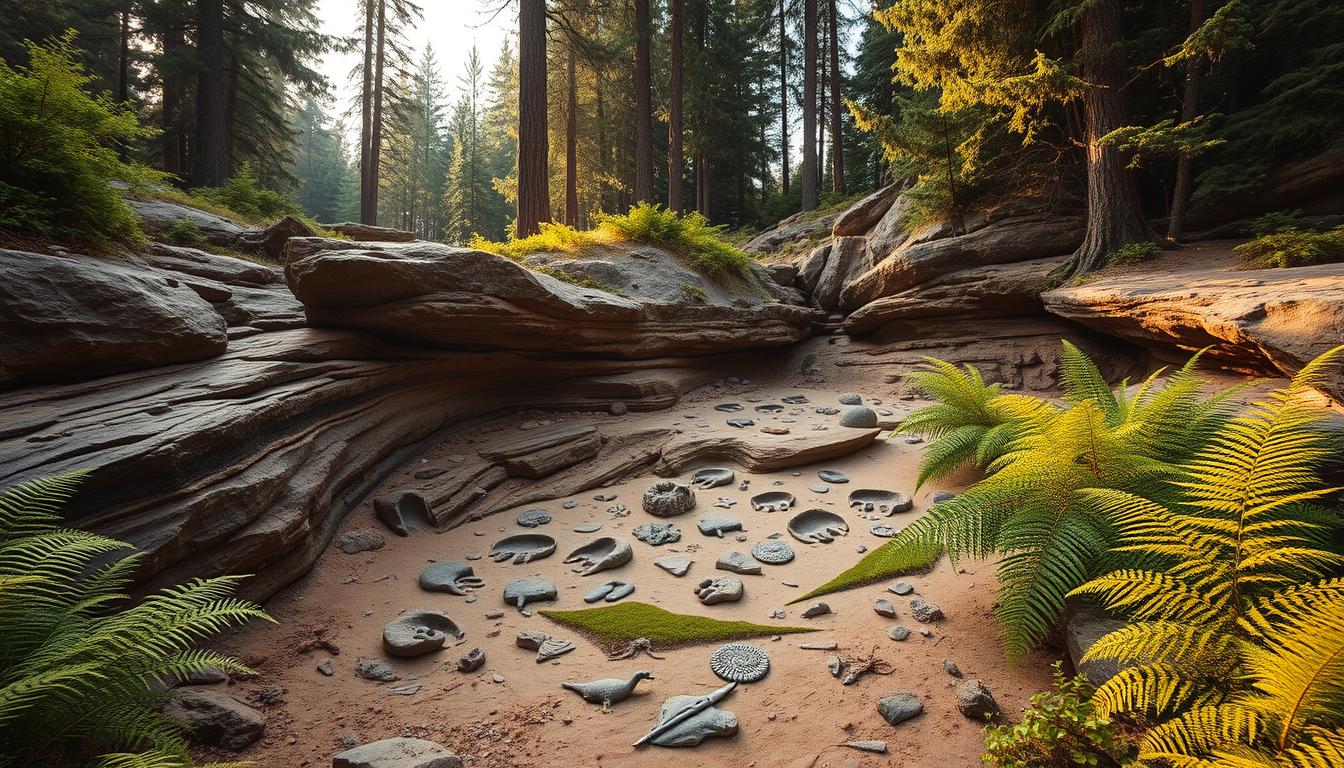
Fossils can be many things, like the bodies of long-lost creatures or their tracks. Body fossils show us what ancient species looked like. Trace fossils tell us about their behavior, like how they moved and ate.
“Fossils are the physical remains of once-living organisms, preserved in the Earth’s crust. They are like snapshots in time, frozen in the rock, revealing the incredible diversity of life that has inhabited our planet.” – Dr. Sarah Tischler, Paleontologist
Fossilization is a natural wonder that needs special conditions to happen. Things like quick burial and the lack of oxygen help keep these ancient remains intact.

Fossils are more than just old relics; they are essential for learning about life’s history. By studying fossils, scientists can understand how species have changed and evolved. This helps us see how ecosystems and life on Earth have evolved over time.
Major Fossil Discoveries Throughout History
Paleontology, the study of ancient life through fossils, has given us a lot of knowledge. It started with the Archaeopteryx in 1861 and includes the Tyrannosaurus rex. These finds have changed how we see evolution and life’s history.
The Archaeopteryx, found in Germany, was a big deal. It showed how dinosaurs and birds are related. This find changed how we think about life’s beginnings.

The Tyrannosaurus rex, found in the late 1980s, is famous. It was a huge predator. Its fossils have helped us learn about its life and the world it lived in.
“The discovery of fossils is like uncovering the pieces of a giant puzzle that helps us reconstruct the story of life on our planet.”
“Lucy,” a nearly complete Australopithecus afarensis skeleton, was found in 1974. It’s in Ethiopia. These finds have helped us understand human evolution better.
These discoveries and many others keep shaping our view of the past. They lead to new ideas and more research in Paleontology. As we find more, the story of life on Earth gets more fascinating.
How Fossils Help Us Understand Evolution
Evolutionary Biology studies how species change over time. It relies heavily on insights from fossil discoveries. These ancient life forms give us a peek into the past. They help scientists trace the history of various organisms and show how different species are connected.
The discovery of transitional fossils is key evidence for evolution. These fossils have traits from two different evolutionary stages. They show how species gradually change over generations, backing Darwin’s theory of evolution by natural selection.
“Fossils are the footprints of evolution, preserving a record of the various life forms that have inhabited our planet over billions of years.”
The fossil record is a timeline of fossils in Earth’s layers. It helps prove how species are related. By studying these fossils, scientists can map out the evolutionary paths of many organisms. This includes from the first single-celled life to today’s complex vertebrates.

By looking at Evolutionary Biology through fossils, researchers learn a lot. They understand how life adapts, how species form, and how some ancient life forms disappeared. These fossils help us see how life on Earth is always changing.
Fossils and Climate Change Insights
Prehistoric Ecosystems are full of secrets about our planet’s past. Fossils are key to unlocking these secrets. By studying ancient organisms, scientists can learn about the climate of long ago. This helps us understand how our planet has changed over time.
Microfossils like pollen and plankton give us clues about the past climate. They show us how temperature and rain patterns changed. Plant fossils also tell us about old ecosystems and how they were shaped.
“Fossils are the key to unlocking the secrets of our planet’s past, and their insights have far-reaching implications for how we understand and predict future climate change.”
Scientists use all kinds of fossils to paint a picture of Earth’s climate history. From the Paleozoic Era to today, they piece together how the climate has changed. This knowledge helps us make better predictions for the future.

The study of fossils is vital for understanding our planet’s climate past and future. As scientists find more fossils, we learn more about climate change. This knowledge helps us work towards a more sustainable future.
The Science Behind Fossil Excavation
Discovering our planet’s ancient history is a precise and detailed task. It involves various Excavation Techniques that need careful thought and accuracy. Paleontologists, who study Paleontology, pick excavation sites based on geological signs and past finds. They aim to find the fossilized remains of long-lost species.
The importance of Fossil Preservation cannot be overstated. These ancient treasures are often fragile and need special care to avoid damage. Techniques like using soft brushes and dental tools, along with protective plaster casts, are key. Each step is vital to keep these precious pieces of history safe for future study and wonder.
“Fossil excavation is like solving a three-dimensional puzzle, where every piece holds a valuable clue about the history of life on our planet.”
Paleontology is a field that brings together geologists, biologists, and chemists. They work together to uncover the stories hidden in these ancient fossils. By studying the sediment around the fossils and their age and makeup, they unlock the secrets of our planet’s past.
Paleontologists document every step of the excavation. This ensures that the wealth of information in these fossils is saved and shared. Their commitment to Fossil Preservation and the use of precise Excavation Techniques help us learn more about Earth’s evolution and its changes over billions of years.
Famous Fossil Sites Around the World
The world is full of famous fossil sites, from the Gobi Desert in Mongolia to the La Brea Tar Pits in Los Angeles. These places are like windows into Earth’s past. They show us how life evolved on our planet.
The Burgess Shale in Canada is a standout. It’s filled with perfectly preserved marine creatures from the Cambrian era. This site has changed how we see early animal life, showing us how diverse ancient oceans were.
The Petrified Forest National Park in Arizona is another must-see. Here, ancient trees are turned to stone, giving us a peek into the past. Visitors can see the trees’ vibrant colors and detailed patterns.
“Fossil sites are not just repositories of ancient life; they are windows into the past that help us understand the complex story of our planet’s evolution.”
It’s important to protect these fossil sites. They keep giving us new insights into the ancient world. By supporting conservation and responsible digging, we help keep these sites open for future scientists and explorers.
The Role of Fossils in Popular Culture
Dinosaur Fossils have amazed people for centuries. They have a big impact on popular culture. From movies to museum exhibits, they have captured the hearts of many, sparking a love for ancient history.
The Jurassic Park movies brought dinosaurs back to life. They made people excited about fossils and paleontology again. This shows how powerful movies can be in inspiring us.
“Fossils are not just dry bones and rocks; they are windows into a lost world that continues to captivate and inspire us.”
Dinosaur Fossils also shine in literature, art, and museums. Places like the American Museum of Natural History show off amazing dinosaur skeletons. These displays attract visitors of all ages, inspiring a love for nature.
The lasting charm of Dinosaur Fossils shows our deep curiosity about life on Earth. Exploring these ancient creatures helps us appreciate the journey of life and our planet’s strength.
The Future of Fossil Discoveries
Scientific research is growing, and paleontology is getting more exciting. New tech like CT scanning and 3D printing change how we study fossils. They let us see new things about Evolutionary Biology and the ancient world.
DNA analysis is a big deal in Paleontology now. It lets scientists understand ancient species better. By studying DNA from fossils, we learn more about Earth’s history and life.
“The future of paleontology lies in the integration of cutting-edge technologies with traditional field work and analysis. As we continue to push the boundaries of what’s possible, the secrets of our planet’s past will be unveiled in ways we can scarcely imagine today.”- Dr. Samantha Greenfield, Renowned Paleontologist
Experts think we’ll find more fossils in new places soon. This includes the ocean and other places we haven’t looked at before. Scientific Research there could teach us a lot about Evolutionary Biology and how our world changed.
Thanks to new tech and hard work by Paleontologists, the future of fossil finds is exciting. It will help us understand our planet’s past better. This will lead to a deeper love for the natural world.
How to Get Involved in Paleontology
Paleontology is the study of ancient life through fossils. It’s a field full of opportunities for those interested in Earth’s past. Whether you’re a student, scientist, or nature lover, there are many ways to join in.
Volunteering at fossil dig sites is a thrilling way to get involved. You’ll learn excavation techniques and help with scientific research on fossil discoveries. Museums and research centers often have these programs. They let you work with experts and uncover ancient secrets.
If you prefer something more accessible, try citizen science projects. These projects let the public help with tasks like data collection and fossil identification. You can do this online or in your community. It’s a great way to learn about the past and improve your skills.